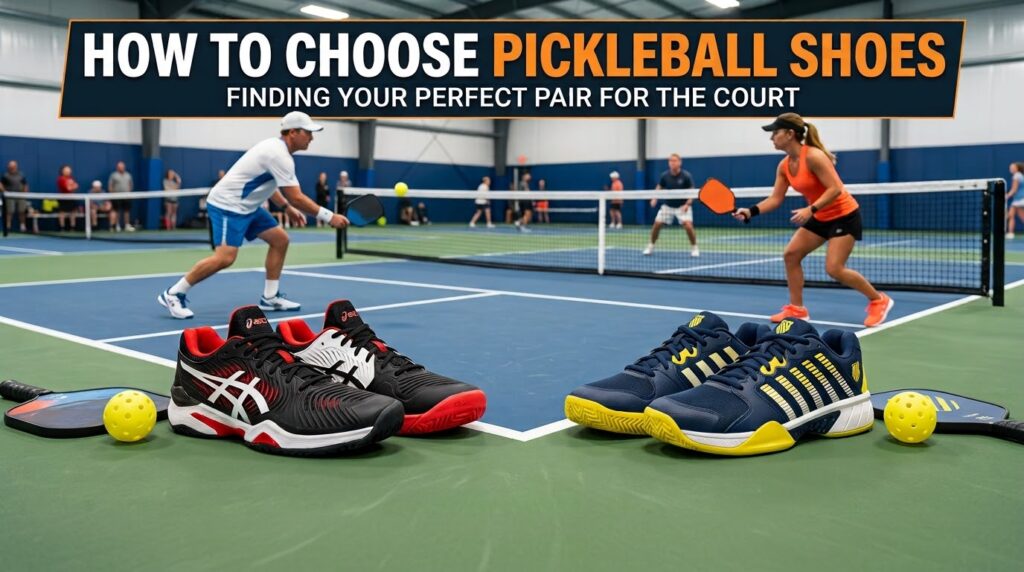
In this article, we will clarify some factors that matter most, and players often ignore them. Pickleball is an aggressive sport, and your shoes take the brunt of every motion. So, the wrong pair causes blisters, slips, and sore ankles, while the right pair helps you move faster, feel steadier, and play longer.
This guide will help you decide and choose the right pickleball shoes. You’ll also learn what to look for, what to avoid, and how to match a shoe to your court and playing style.
Why Your Shoes Matter in Pickleball
Most players new to pickleball see it as a gentle game, but the action along the kitchen line—quick movements, split-steps, lunging for dinks, and pushing off for volleys—is intense. Each move places sideways force on your feet, ankles, and knees.
What matters in good pickleball shoes
- Good pickleball shoes reduce risk of ankle rolls and knee strain
- Improve traction and balance
- Absorb impact on hard courts and provide better protection
- Keep feet comfortable through long sessions and aggressive play
1. Choose Court Shoes, Not Running Shoes
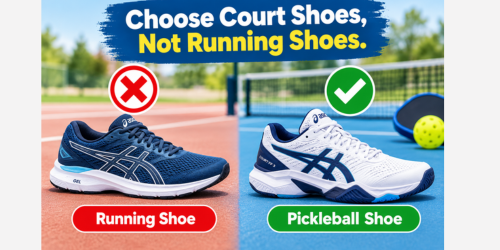
Choosing court-specific shoes instead of running shoes is key for successful play. Court shoes support lateral movement, while running shoes are basically designed for forward motion.
One question most players have is what sets them apart. The main difference is design and materials.
Shoes designed for running have a tall, soft midsole and a flexible upper. This lets your foot roll over the edge of the sole when you cut sideways. But court shoes have a flatter, wider base and a reinforced upper that keeps your foot centered and offers optimal stability during quick lateral steps.
Best options for you
- Pickleball-specific shoes: These shoes are specially designed with the sport’s movement patterns and structured court surfaces in mind.
- Tennis shoes: These are a strong alternative because tennis and pickleball demand similar footwork.
- Volleyball and badminton shoes: They suit indoor play, but they can’t provide the same support and may also lack outdoor durability.
2. Prioritize Lateral Support and Stability

Lateral support is also a key factor in keeping your foot stable during sharp direction changes on the court. It also protects your ankles, reduces excessive foot rolling, and enhances balance and stability. You’ll move with more confidence and control.
What to check
- Reinforced side walls: Check for firm overlays along the sides that stop your foot from sliding over the sole.
- A supportive midfoot shank: It helps to prevent shoes from twisting excessively and maintain the structure under pressure.
- A low, wide platform: A lower profile keeps your foot closer to the ground and provides a feel more connected to the playing surface.
- A secure heel counter: A firm heel cup locks your heel in place and stops your heel from lifting out of the shoe.
3. Match the Outsole to Your Court Surface

In shoes, the outsole takes the most pressure and plays a crucial role. But the best outsole for a pickleball court depends on the type of court you play on. Indoor and outdoor courts have different surfaces, so their traction and durability requirements can vary.
For indoor courts
If you play on indoor courts, choose a non-marking rubber outsole with a softer compound. Also, check the herringbone tread pattern, which gives you solid grip on smooth surfaces.
For outdoor courts
Outdoor courts are usually rougher than indoor surfaces, so choose a harder, more durable rubber compound outsole. This type of outsole handles regular wear and tear while providing dependable grip.
4. Consider Weight
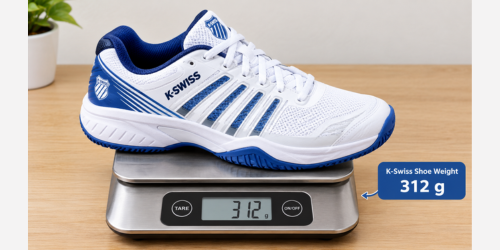
Obviously, extreme lightness helps you move faster and stay tireless, but it may lack support and durability. I recommend mid-weight shoes because they offer a good balance of lightweight comfort and the stability of heavier shoes.
5. Check Durability and Toe Protection
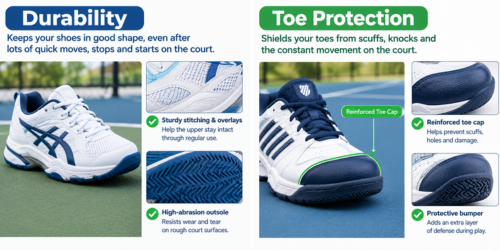
Durability matters in pickleball shoes because they take a lot of abuse. Players drag their toes when they are competing hard, and this friction destroys weak materials.
Durability features to look for
- A long-wearing outsole: Choose brands that offer a durability guarantee or a six-month outsole warranty.
- A reinforced toe cap: It provides excellent protection to the front of shoes from scuffs, scratches, and damage that occur due to frequent foot movement.
- Sturdy stitching and overlays: They help keep the upper intact and secure in place. They also add durability and help prevent the material from coming apart during regular play.
Common Mistakes When Buying Pickleball Shoes
You should avoid these errors
- Wearing running shoes: This type of shoe can make your feet less stable and increase your risk of injury.
- Buying based on looks alone: Always check the shoe’s construction and performance rather than its style because style should never outrank support.
- Choosing the wrong size: A tight pair can cause discomfort, while a loose fit may allow your feet to slide around. So, before you buy, try the fit in person or check the return policy.
- Ignoring worn-out shoes: If your shoe outsole tread becomes flat and the midsole no longer provides proper cushioning, it is time to replace them.
- Skipping socks: Wearing the wrong socks or playing without them can lead to discomfort and blisters.
Popular Pickleball Shoe Brands Worth Considering
I will suggest two brands that I have used personally and tested from every angle.
Final Thoughts
Use the factors above to find footwear that protects your body and sharpens your game. Also, if you’re a regular player, you should pay attention to the best pickleball paddle selection because shoes and paddles work together to improve your overall performance on the court. If you’re still unsure which paddle to choose, a pickleball buying guide can help you understand the key features and find the one that suits your playing style.